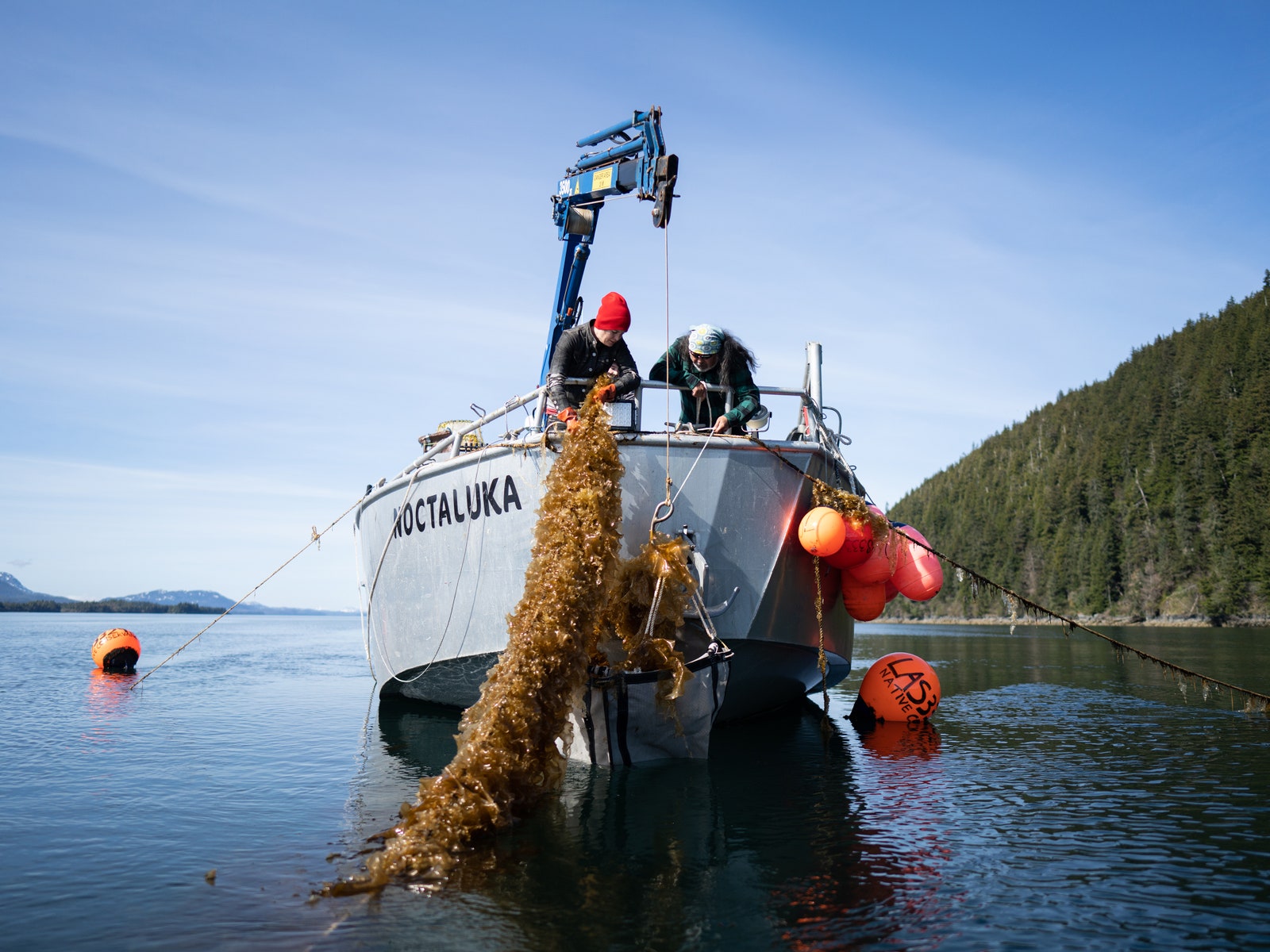
As an Eyak Athabascan man born into a fishing family on Alaska’s Prince William Sound, Dune Lankard spent decades at work as a subsistence and commercial seafood harvester.
Then in the wake of the Exxon Valdez Oil Spill disaster of 1989, which devastated the environment, Lankard’s goal became protecting the lands and waters of Prince William Sound. His mission, as he sees it, is feeding people, restoring the ocean and building a regenerative economy.
“Being a fisherman, I always felt that I was a provider and that everyone has their roles in their community, and especially in tribal communities,” Lankard said. “So I felt that ocean farming, both kelp and mariculture, could have a different importance of not only feeding our people, but helping heal and restore the ocean in the process.”
Lankard’s passion for Indigenous ocean farming, food sovereignty and ocean restoration won him accolades this summer in the form of a James Beard Foundation Impact Award for his lifelong leadership in his field. According to his LinkedIn profile, Lankard’s Eyak name, Jamachakih, means “Little Bird that screams really loud and won’t shut up.”
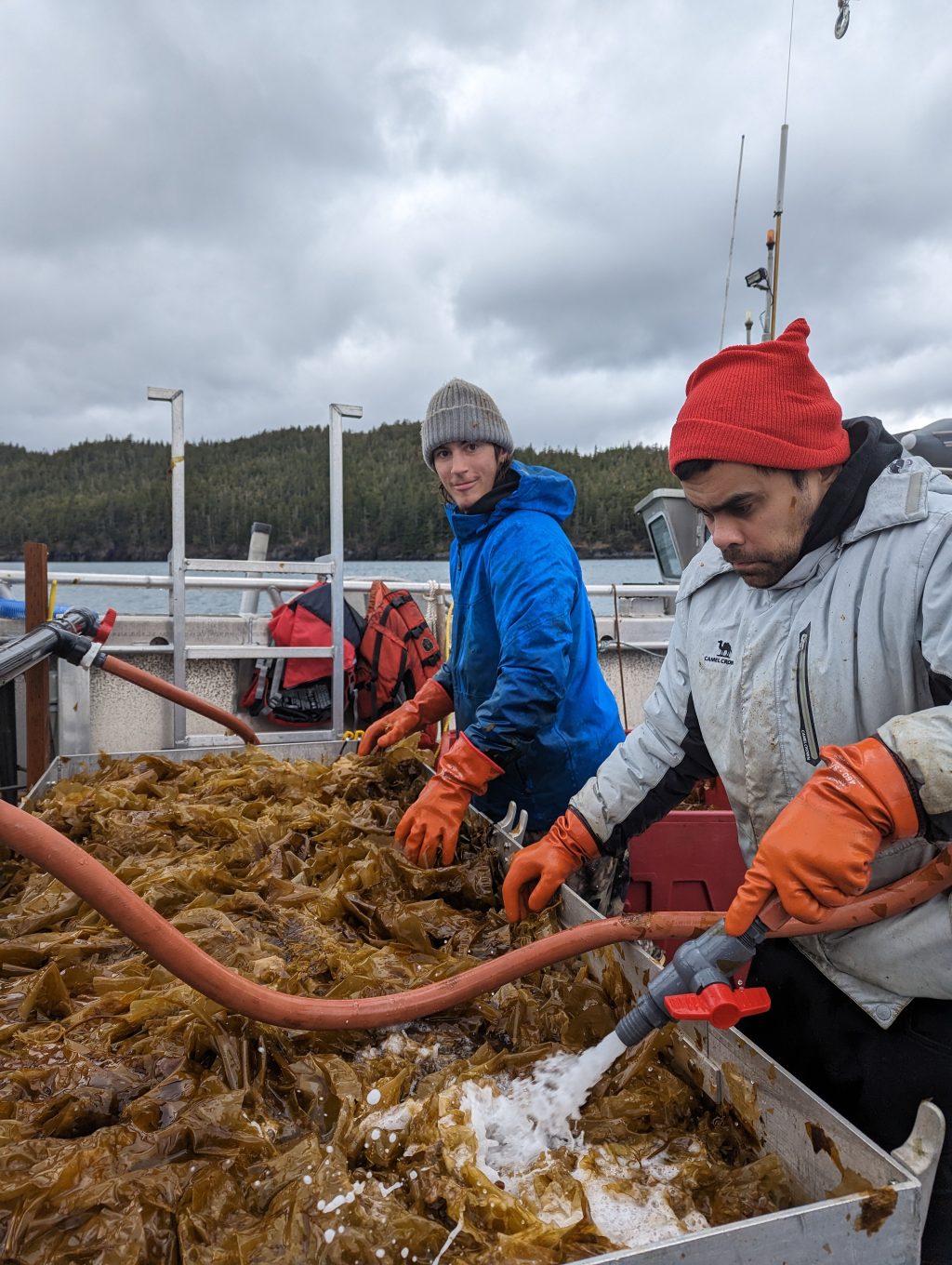
Through the Native Conservancy in Cordova, of which he is a co-founder, Lankard has helped lead food deliveries to communities and the elderly, host kelp farmer immersion trainings, and develop a community kelp seed nursery and the Native Sea Trust – the last being key to long-term mariculture access and co-management rights for Alaska Native communities.
All of these facets of the Native Conservancy are important to him, but it is development of kelp farming that Lankard sees as key.

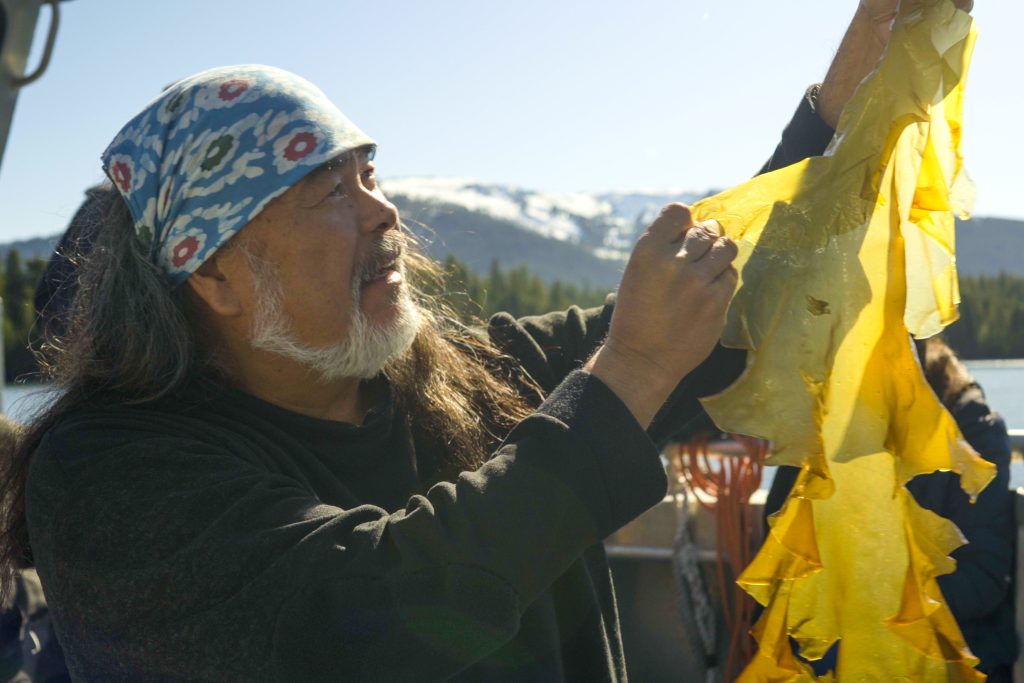
In 2017 a marine heatwave known as the “blob” resulted in an abnormally calm and sunny summer with sea surface temperatures up to 7° Fahrenheit above the seasonal average. The prolonged temperature rise, a continuation of a larger “blob” phenomenon that began in 2013 and lasted until 2016, disrupted the area’s marine ecosystem and its food web.
Its impact persisted in the subsurface water column through 2017 and 2018. The warm water increased juvenile Pacific cod mortality, weakened adult cod and disrupted the food web, leading to a 79% biomass drop in the Pacific cod populations, especially in the Gulf of Alaska.
“When the ocean heats up the oxygen in the tidal zone is gone and whatever is in there is cooked to death,” Lankard said. “I saw (dead) salmon and birds floating around.”
Over the next couple of years Lankard wants to add labs to learn how to create kelp that can thrive in such temperatures, to acclimate kelp that will grow differently in different regions.
“We are working with science groups to learn how to grow the kelp and how to scale up. It has been hard, but it has also been fun,” he said. “A lot of tribes are looking at the ocean a little differently. If you took all the aquaculture and mariculture species and add them all together, 50% of the weight of what is being grown is kelp. It’s just a matter of figuring out what will grow where.”
Lankard said he’s trying to foment a more regenerative environment.
“My learning curve has been straight up for seven years,” he said. “In ocean farming we are trying to do emergent training and technical assistance programs, so people understand the barriers to entry. We want to turn these communities into citizen scientists.”
Still, he doesn’t see all this as an easy sell.
“The reality is that things are going to get harder before they get easier,” he warns in one of several videos online promoting the future of kelp farming. “But if we as the human race collectively use our energy and our intelligence and find the courage that we need to actually build regenerative economies that are helpful and restorative for our planet rather than continue to take from the planet then we may have a chance to survive.”
But Lankard maintains he’s excited about the prospect.
“The thing that is exciting about this kelp and mariculture industry is that it is going to help restore, mitigate, create conservation, create habitat that has been impacted – in our case by the Exxon Valdez Oil Spill,” he said. “What people are witnessing not only in Alaska, but around America and around the world, is a modern-day land claims on our ocean.”
Over the past year the Native Conservancy hosted two kelp farmer immersion trainings in Kake and Metlakatla – a collaborative effort of tribal members, scientists, certified divers and mariculture practitioners with a focus on strengthening Indigenous leadership knowledge and furthering Alaska’s growing seaweed economy.
The Kake training in August focused on ocean habitat, hatchery operations, cooperative business development and science – blending technical learning with traditional, ecological and Indigenous knowledge and community-based stewardship. Training in Metlakatla in October emphasized kelp farm design, deployment processing and market readiness tailored to the needs of Southeast Alaska’s Indigenous emerging kelp farmers, Native conservancy noted in its 2025 annual report.
That work is being funded by the Exxon Valdez Oil Spill Trustee Council, Southeast Conference and others, according to Lankard. The Native Conservancy is talking with companies who want to make a variety of foods and other products out of kelp.
“It has been an interesting time for us,” Lankard said. “We have gone from test sites to pilot programs to now we want to get the processing and value adding done so we can scale up.”
The Native Conservancy has also completed a new double-wide conjoining 40-foot Community Kelp Seed Nursery connex system in Cordova, built by Keolani Booth, director of the Native Sea Trust.
The seed nursery is part of the Native Conservancy’s broader effort to create a network of portable and affordable connex container kelp seed nurseries for remote Alaska communities. As cultivation is underway, testing innovative hatchery and filter designs and contamination-control protocols are being implemented to ensure the highest quality seed production. Once mature, spools of nursery-grown kelp will be distributed to ocean farmers across Alaska, helping to seed food sovereignty and strengthen the rapidly emerging mariculture economy, according to the Native Conservancy report.
Meanwhile the Native Conservancy’s “Native Sea Trust,” the organization’s broader work in coastal conservation and regenerative ocean farming in Alaska, is working to secure kelp ocean farm permits for Southeast Alaska Tribes, to ensure that Indigenous people can access, reclaim and steward their ancestral ocean waters.
“Who farms in the ocean does matter, and the reason I say that us because the Indigenous peoples who have been the original guardians and stewards for thousands of years are the ones who should be farming,” said Lankard in another of his online videos promoting ocean farming. “We can figure out how to address how to survive on this planet. It’s not about world wars and migration beyond belief. It’s about restoring and bringing back and regenerating that land and that ocean and that way of life that has sustained us for thousands of years.
“It’s not going to happen because we are lucky, he added. “It’s going to happen because we actually care and we do something about it.”