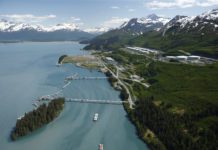
A federal permit clearing the way for a road through Izembek National Wildlife Refuge connecting King Cove and Cold Bay on the Alaska Peninsula is facing new legal challenges.
Trustees for Alaska filed a motion in July asking the U.S. District Court in Anchorage to stop all road building activities in Izembek.
They are representing Friends of Alaska National Wildlife Refuges, the National Wildlife Refuge Association, Alaska Wilderness League, Wilderness Watch, and Sierra Club.
The motion was in response to the U.S. Army Corps of Engineers issuing a Clean Water Act Section 404 permit on July 9, authorizing the single lane gravel road through the federal refuge. The USACE action followed a 2025 federal land exchange where 490 federal acres inside the refuge was traded to the King Cove Corp., an Alaska Native Village corporation.
Proponents of the road and state officials contend that the ground link between King Cove and Cold Bay is vital for dependable emergency medical evacuations during severe weather when small planes from King Cove to Cold Bay are grounded. Opponents of the road say it would threaten the health of a vast ecosystem vital to wildlife – from caribou to migratory birds, including Pacific black brant and Emperor geese.
“Interior bypassed Congress when making a backdoor deal that put the heart of the Izembek Refuge in private hands, and now the Army Corps has handed out a permit giving the green light for bulldozing through an area essential to the health of Izembek,” said Michelle Sinnott, a senior staff attorney with Trustees for Alaska, which filed the litigation.

The Native Village of Hooper Bay, the Native Village of Paimiut, Chevak Native Village, and the Center for Biological Diversity filed related litigation.
While opponents of the road cite potential dangers to wildlife, including migrating waterfowl, the U.S. Fish and Wildlife Service promotes that Izembek is a world-class waterfowl hunting area, including virtually the entire Pacific population of black brant geese across its 150-square-mile lagoon. Other migrating waterfowl include harlequin ducks, Barrow’s goldeneye, various eiders, mallards and northern pintails.