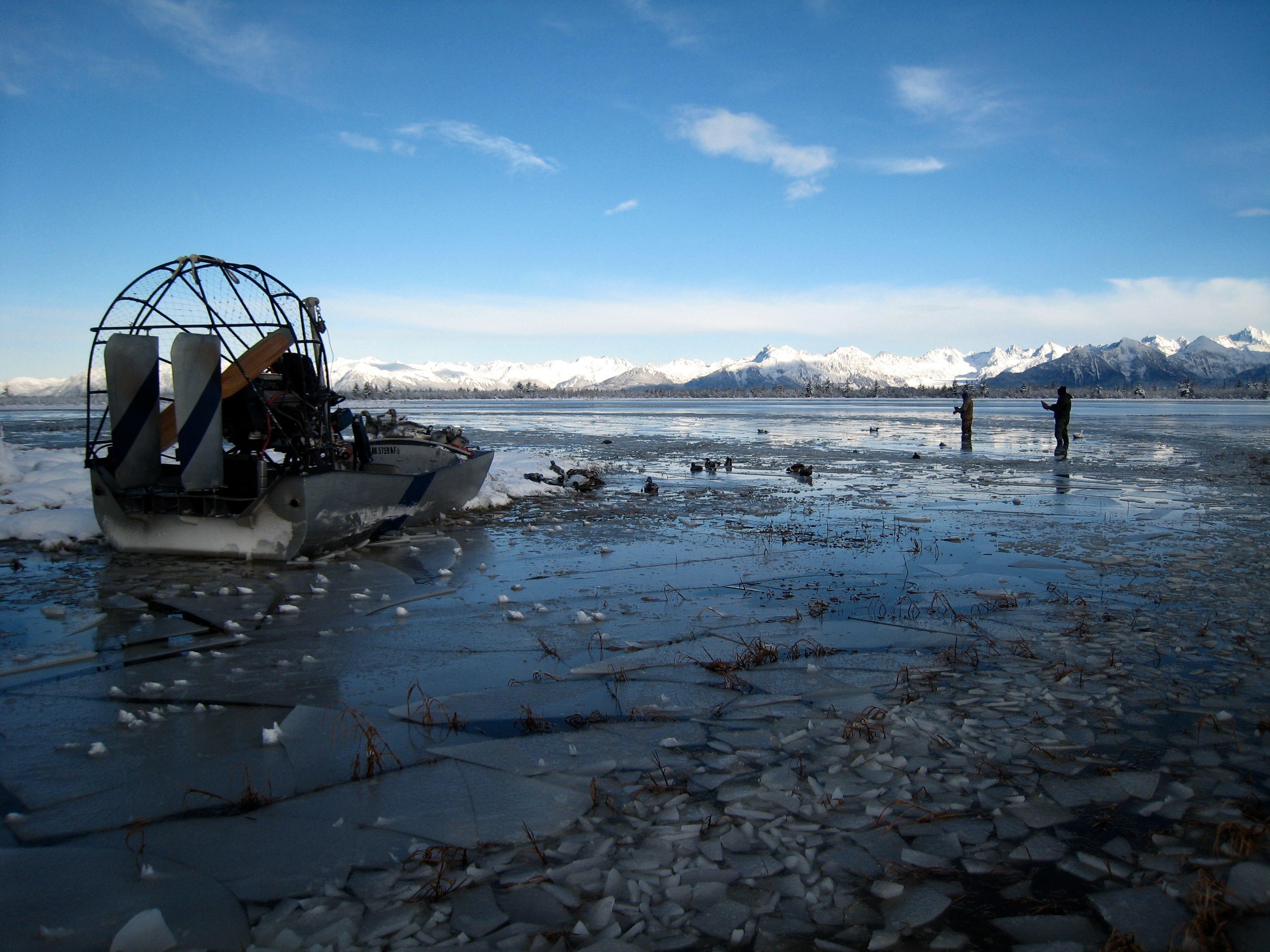
The fall season for duck hunting on the Copper River Delta starts on Sept. 1 and ends on Dec. 15. The early part of this season features mainly local birds, which have nested here and are often still rather scrawny and immature, with dull plumage that helps them avoid predation. Full of pin feathers, they are almost impossible to pluck.
It’s the legendary “northern” birds, plump and flashy with color, that entice hunters to push the envelope and send hearts racing in late October, be it green-headed mallards with four black curls on their tails, tan-tufted widgeons (hence the nickname “baldpates”), or chocolate and white pintails with spectacular elongated tails.
These birds often appear out of nowhere and have caused more than one shivering hunter to spill a thermos of coffee with the whoosh and whistling of their wings as they drop into the decoys at 40 miles an hour.
Often, fresh from the far reaches of nesting habitat in the northern Alaska, they seem surprisingly easy to decoy. Yet there truly is safety in numbers, and a three shot-barrage hardly puts a dent in their flock.
For years I would admire Les Maxwell and Pete Fridgen dropping birds into Walhalla Pond from my blind on the lower edge of the same pond. They were far enough away that the ducks would start falling before the sound of the shots was heard.
Les was undoubtedly the best wing shot on the Delta. More than once, old-timer Jim Webber would relate how Les always let him take the first three shots and then casually pick out several birds taking evasive action.

Because of work, hunting partner Randy Bruce and I went out on the weekends only. A commercial fisherman, Les had the luxury of hunting out of his nearby cabin all fall. Often we would see him standing on his porch, scanning the offshore horizon with binoculars for migrating flights of Northerns.
Usually after we returned from the morning shoot he would wander over to check our birds to see if they were plump and feathered out, and thereby suitable for plucking.
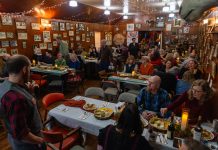
Many of these birds would end up being served at the Annual Elks Duck Feed, with Master Chefs Bobby Maxwell, Gary Raymond, Jim Webber, Randy Bruce, Pete Fridgen, and Terry Granger doing their magic to serve a wonderful feast. The enticing smell of the roasting birds wafted through the Elks Hall, and before it was all over not only the ducks were well roasted.
Lifetime Elk and retired resident U.S. Fish and Wildlife Protection Officer Otto Koppen was always a guest of honor at the feed. He was a legend, and quite a connoisseur of roast duck. The chefs went out of their way to have a special bird prepared just for him.
One year the chefs lined up and hand delivered it to his table. They gathered around and waited for his judgement.
Otto carefully took a bite, and then said “Not bad for a canvasback.”
Canvasbacks, you see, are rarely found on the Delta. They are also considered to be one of the best eating ducks.
I was lucky to have one fly into my three-shot barrage. It was plucked and kept separate just for Otto.
The chefs applauded Otto on his tasting skills and hoisted another toast before heading back to the kitchen.
Alas, the Elks Lodge is no more, and canvasbacks seem to have vanished too.
But memories of the Northerns, and much more, will always endure.