A veteran Southeast Alaska commercial harvester was sentenced on March 10 to six months in prison for violations of the Lacey Act and the Endangered Species Act.
Court documents showed that between October and November of 2020 Dugan Paul Daniels, 55, of Coffman Cove, had knowingly submitted false fishing records to make it appear that he lawfully caught sablefish in federal waters on two separate occasions. An investigation, however, showed that he harvested illegally fish with a market value of $127,528 in state waters of Chatham Strait and Clarence Strait.
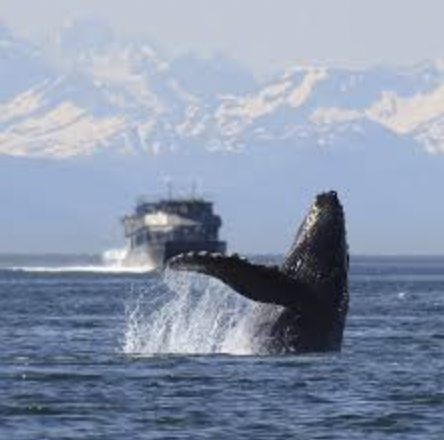
The investigation further revealed that in March of 2020 Daniels and three crew members were fishing for sablefish, also known as black cod, southwest of Yakobi Island in the Gulf of Alaska when they spotted and tried to take an endangered sperm whale. Apparently, Daniels had a crewman shoot the whale multiple times and tried to ram the whale with his fishing boat.
Court records showed that Daniels documented the encounter in writing and through text messages sent from a GPS communication device. In some messages he stated he wished he “had a cannon to blow” the whale out of the water and that he hoped “to be reeling in a dead sperm whale.”
NOAA does not know if Daniels actually succeeded in killing the whale, as no sperm whale carcass was reported in Southeast Alaska in 2020.
Daniels pleaded guilty on June 6, 2024, to one count of violation of the Lacey Act for false labeling and one count of Endangered Species Act violation for an illegal take. Taking means to harass, harm, pursue, hunt, shoot, wound, kill, trap, capture or collect or to attempt engagement in any such conduct.

The court found Daniels’ actions to be deliberate and emphasized the importance of deterring others from similar conduct because of the threat to Alaska’s marine resources.
Daniels was ordered to pay a $25,000 fine and serve three years on supervised release, with a one- year ban on commercial fishing, plus 80 hours of community service as special release conditions.
U.S. Attorney for the district of Alaska Michael J. Heyman said this sentence serves as an example that such violations will not go unpunished.
“Anyone who violates the laws that protect Alaska’s marine resources will face serious repercussions,” said Benjamin Cheeseman, assistant director of NOAA’s Office of Law Enforcement, Alaska Division.