Local officials and out-of-town developers acknowledged the unique challenges for building more housing in Prince William Sound during a roundtable discussion last month, calling for investment in various forms.
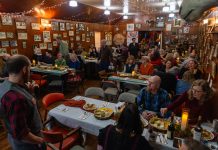
The roundtable — put on by the Prince William Sound Economic Development District in Cordova on Oct. 15 — aimed to address the critical lack of housing in the region by inviting different stakeholders to speak from their experiences. Those stakeholders included rural housing organization officials, Alaska real estate developers, Cordovan homeowners and contractors.
Survey says: People are dissatisfied with the housing stock, and a variety of factors make it difficult to build more.
The need to address housing in not only Cordova but also Valdez, Whittier, and even Chenega and Tatitlek comes from Minnesota Housing Partnership (MHP)/McKinley Research Group data taken from Prince William Sound’s current residents. MHP is a nonprofit that advocates for equitable housing policy, researches housing solutions, and delivers community development services. The nonprofit, which conducted the Prince William Sound housing survey, is based in Minnesota but operates across the U.S.
Of the 238 survey respondents in Cordova and Eyak, 90% said housing availability was poor in their community, according to MHP Community Development Manager Erika Brown. That percentage was similar in Chenega, where 80% of the 14 respondents said they were dissatisfied with the current housing stock. In Valdez, of the 210 households surveyed, 55% of them said housing was poor there, too.
And for the people with expertise who want to build up Prince William Sound, challenges persist.
Ken Jones — a Cordova City Council member, local fisher and property owner — said during the roundtable that buying up housing or converting properties into housing is difficult because of how expensive everything is now.

“My struggle right now is, in addition to doing the property development, I also am a commercial fisherman and the last few seasons have not been great … and then also the high interest rates,” he said.
The cost burden is a statewide issue.
Jason Novotny, the president of Hiland Construction in Anchorage, said during the roundtable that a lot of the houses he’s building now cost between $300 and $350 per foot, which he attributed partially to supply chain issues.
“Getting materials here is a big problem, I run into this every single day,” he said. “Anything outside of Home Depot or Lowe’s — you’re looking at six to eight weeks to ship things up here and that’s a problem. That’s a big problem.”
Novotny also said the small number of contractors in and around Anchorage has him inundated with projects.
“I am overwhelmed,” he said. “My schedule for this year is completely booked, we’re taking projects on a case-by-case basis and I’m looking at next year, 2025, and my schedule is already almost pretty much filled for big projects.”
Similar to the few contractors available in Anchorage, Jones said in remote places like Cordova it’s hard to always find the skilled labor to push development projects through the finish line. He said he’s experienced this first hand, after his one contractor friend in town he usually worked with moved.
“So now I have a lack of workforce,” Jones said. “I need skilled labor. I need somebody from out of town who’s done a development that could maybe come in and be the project lead, and then teach all my unskilled laborers how to swing a hammer.”
What are some possible solutions?
While the stakeholders went back and forth on the issues they face in housing development, many of the participants of the Cordova roundtable had also spent time brainstorming creative solutions.
Jones owns a triplex that he converted from a large single-family home, which he said could work well to bring more housing to Cordova — noting that it’s easier to work with existing housing stock than to start from scratch.
“If developers can come in and do that and sell them, there’s actually pretty good profit to make in that,” he said. “I know I added a ton of sweat equity to that place when I did it, and I’m looking to do more of that.”
Jones said he also knows of around 30 other housing units in disrepair that could be restored.
“That’s just because of lack of maintenance and the harsh climate that Cordova is known for,” he said. “The lowest hanging fruit is just to rehabilitate what we already have.”
Novotny in Anchorage said he’s been speaking with a Vietnamese housing company that ships modular, pre-built homes to the Port of Anchorage. He walked through one at a housing show in Las Vegas last year, and said it was “really nice.” Novotny said he’s even considering making a personal investment into one of these modular homes to get a sense of the shipping process and to see how it fares in the Alaska climate.
“We can build these in about a week and they cost a hundred grand,” he said. “I’m looking for ways to steer away from conventional homebuilding, possibly.”
Bob Marquez, a manager at the Rural Alaska Community Action Program (RurAL CAP), said the nonprofit’s Mutual Self-Help Housing program could be a good option in rural communities looking to develop with limited money or resources. The program allows first-time home buyers in groups of at least 10 an opportunity to own with no down payment, as long as they themselves serve as the construction crew for each other’s homes — working at least 35 hours per week and performing 65% of all the labor under the direction of a RurAL CAP construction supervisor.
Marquez did note, however, that the program is also contingent on municipalities’ individual regulations, people being willing to donate their land, and attracting development partners.
“There’s a lot of benefits to this housing approach, but it’s a climb,” Marquez said.
Kristin Carpenter, the Prince William Sound Economic Development District executive director who led the roundtable discussion, said the group is currently making a list of developable properties in Cordova.
But, she said, “We really need some partners and developers to come in and work with us.”