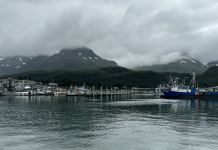
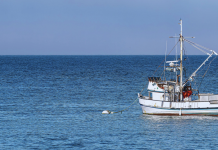
Harvest numbers through Tuesday, July 16, reached upwards of 1.3 million fish in the Copper River District and 3.7 million salmon delivered overall to processors in Prince William Sound.
The Copper River commercial harvest, which will wind up by the end of July, to date includes 1,318,712 sockeyes, while for Prince William Sound overall that catch topes 2.5 million reds, which is above the Alaska Department of Fish and Game forecast, said Jeremy Botz, a fisheries biologist at ADF&G’s Cordova office. Chinook catches of 8,820 kings in the Cordova district and 9,219 kings overall for Prince William Sound are below the forecast, as was the hatchery chum catch at the Wally Noerenberg Hatchery in Prince William Sound.
The Copper River harvesters also have delivered a total of 8,820 kings, 31,166 chum, 531 coho, and 2,946 pink salmon. For Prince William Sound overall, the harvest has also brought in 53,726 pinks, 651 cohos, 1,050,367 chum, and 9,219 kings.
Consumer prized Copper River reds, which were on sale at Fred Meyer stores in Anchorage for $10.99 in early July, sold out quickly, but FishEx, an online Anchorage seafood retailer, was still offering premium portions of the prized Copper River reds at $37.95 a pound. Prices on other fresh wild Alaska sockeye fillets ranged from $12.95 a pound at 10th & M Seafoods to $15.95 a pound at Carrs/Safeway. Pike Place Fish Market was offering wild Alaska sockeye fillets for $19.98 a pound and whole sockeyes weighing four pounds for $54.99.
The Chinook harvest season has ended, the coho harvest is expected to start up in August, and the pinks are just starting to come in, Botz said.
Total statewide salmon harvests declined last week compared to the previous week, signaling an earlier peak for the sockeye harvest, said Sam Friedman, who compiles the in-season weekly commercial salmon harvest at McKinley Research Group LLC. for Alaska Seafood Marketing Association.

“In Bristol Bay, the sockeye salmon harvest is still on track to reach its harvest forecast of 26 million fish,” Friedman said. “This harvest forecast represents a 35% decline from the above-average 2023 harvest of more than 40 million sockeye. In addition to fewer fish, Bristol Bay has also produced smaller fish on average compared to last year.”
The Naknek-Kvichak District of the Bristol Bay fishery was shut down for two days because of a weak run into that district, but was up and running by Tuesday, July 16.
Outside of Bristol Bay, the world’s largest wild sockeye fishery, is flat in Alaska, he said. Pink salmon fishing has been slow so far as well. In Prince William sound, usually the largest pink salmon producing region, the year-to-date 1.1 million pink salmon harvest is down from 5.8 million fish at this point in 2022, the last even year for the humpies.
Average fish weights to date for the 2024 season Prince William Sound purse seine hatchery cost recovery fishery pink salmon at 3.5 pounds, 10.9 pounds Chinook, 4.9 pounds coho, and 9.1 pound keta salmon in the Southeast troll fisheries, and Take Inlet purse seine hatchery cost recovery keta salmon at 6.4 pounds.
Statewide the commercial salmon harvest stood at nearly 40 million fish including upwards of 31 million sockeyes, 6.2 million chum, 2 million pinks, 147,000 kings, and 21,000 coho salmon.