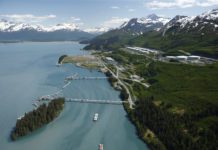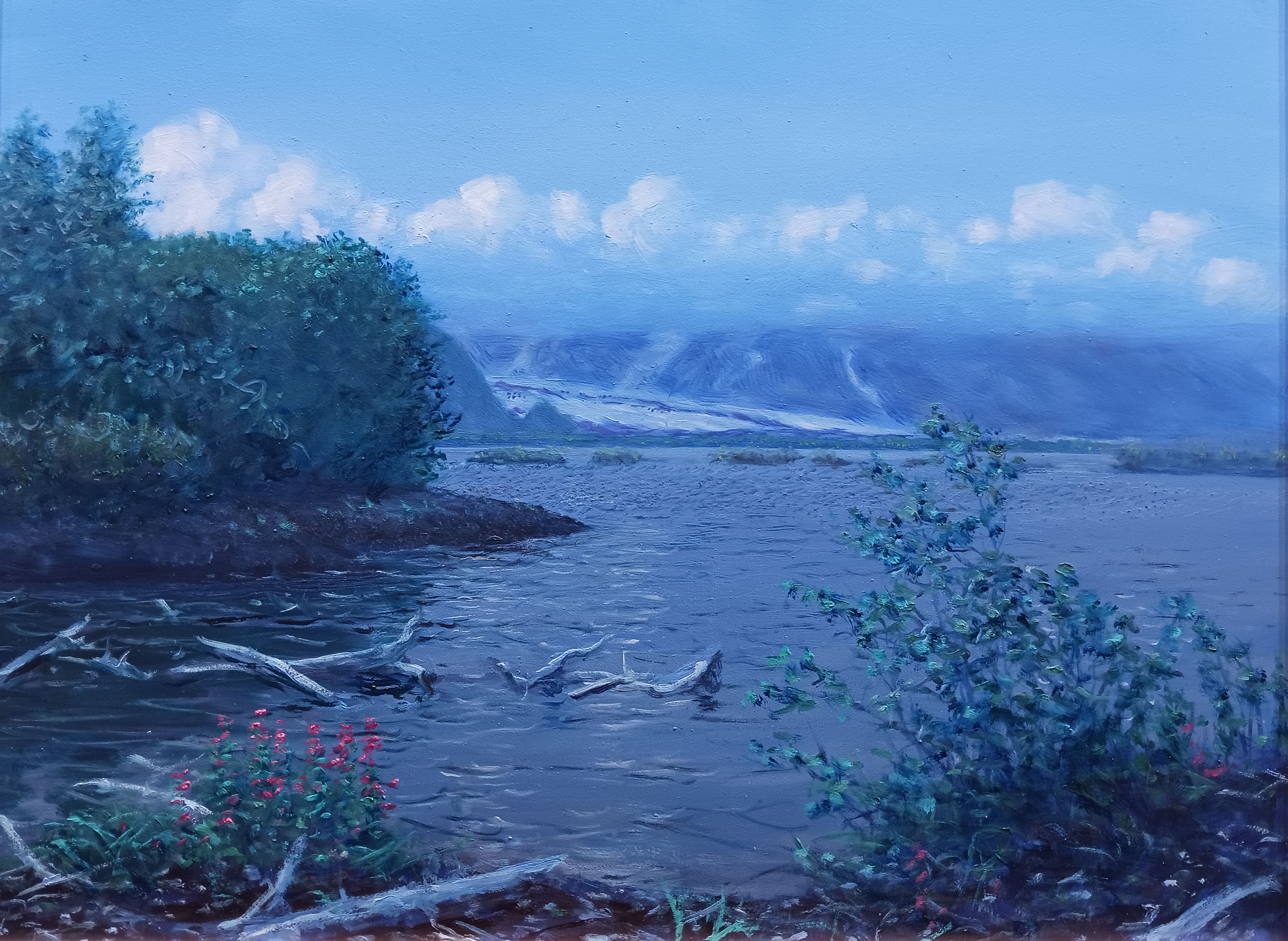
Alaska climate specialist Rick Thoman says the rate of ice loss in Alaska’s glaciers is now three times as fast as it was previously, and it is having an impact on many areas, including the Gulf of Alaska.
From the Cordova perspective this dramatic increase in fresh water (from melting glaciers) reaches its maximum in the spring but continues all summer long at a higher rate than in the past, Thoman said on Dec. 17.
Thoman, a weather expert with the Alaska Center for Climate Assessment and Preparedness, is a contributor to NOAA’s annual Arctic Report Card, which was released on Tuesday.
The report shows that the Arctic, including areas touching the Gulf of Alaska, is experiencing rapid, record-setting warming. Alaska glaciers since the 1990s have lost about 125 virtual feet of ice.
“Glaciers were declining in the 1950s, 1960s and 1970s, but it was quite a slow loss,” Thoman said. “Since the 1990s the rate of ice loss in Alaska glaciers is three times as fast as it was before that.”
Because of the ice loss in the Juneau ice field, for example, local residents there get flooding every summer in the Mendenhall River. That never happened before 2010.

Another thing observed during really warm summers, like summer 2019, is streams that are glacier fed stay cool, which the salmon like, but streams not glacier fed are really warm, according to Thoman.
Steve Thur, NOAA’s acting chief scientist and its assistant administrator for oceanic and atmospheric research, said that “melting permafrost is altering ecosystems, turning over 200 watersheds in Arctic Alaska orange as iron and other elements are released into its rivers. Higher acidity and a larger concentration of toxic metals have been noted in these rivers.”
Key findings of the report for the Gulf of Alaska/Bering Sea region include record warming, marine ecosystem shifts, rapid ocean acidification causing shell dissolution in pteropods, sea ice decline, increased shipping and pollution, and damaging coastal impacts.
The wide-ranging report published by NOAA focuses on a range of problems that start with a warming planet and lead to rising sea levels, rust-colored Alaskan rivers, Greenland’s shrinking ice sheet, and more.
The Arctic is warming over twice as fast as the global average and in recent years has seen the warmest air temperatures and autumns on record.
Shell dissolution in pteropods, a crucial food source, is threatening the Bering Sea ecosystem. The extent of summer sea ice is continuing a long-term decline, with all the lowest minimums occurring in the last two decades, impacting marine mammals and coastal communities.
With less ice comes more ship traffic and the onset of increased marine noise and debris, which is stressful to marine mammals and ecosystems.
In addition, coastal areas are seeing increased storm intensity and flooding.
This is the 20th year that NOAA has released its Arctic report card. President Donald Trump’s administration, meanwhile, has labeled climate change a “con job” and taken steps to halt the Environmental Protection Agency’s ability to regulate greenhouse gas pollution that is causing these changes in the planet’s environment.
The report card, compiled by NOAA, is the collaborative effort of scientists working in academia in the United States, Canada and Europe, as well as researchers at NASA and other federal science entities.
“Since 1980, the Arctic annual air temperatures have warmed nearly three times faster than the rest of the planet,” said Matthew Druckenmiler, a senior scientist at the National Snow and Ice Data Center in Boulder, Colorado, and one of the lead authors of the report.
Earlier this year the Trump administration halted information formerly provided by the National Snow and Ice Data Center.
The report notes that warming bottom waters, declining sea ice and rising chlorophyll levels in the Chukchi and northern Bering Seas are restructuring Arctic marine ecosystems, and that recent shifts in key mid-water dwelling species reflect changing sea ice, prey dynamics and movement of species in the Chukchi and northern Bering Seas.
Changes in Arctic bottom-dwelling species point to emerging borealization of seafloor ecosystems, with some southern species appearing farther north as conditions warm up.
These changes in the Chukchi and northern Bering Seas ecosystems, driven by warming, sea ice loss and species redistribution, affect North Pacific commercial fisheries, Arctic food security and indigenous subsistence practices, the report said.