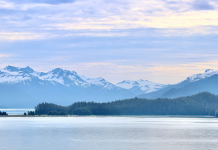
Legislation aimed at protecting the Bristol Bay watershed in southwest Alaska, home of the world’s largest run of wild sockeye salmon, was introduced on May 20, by Speaker of the House Rep. Bryce Edgmon, I-Dillingham, and Rep. Andy Josephson, D-Anchorage.
Coming at the end of a busy first legislative session, House Bil 233 – which would strengthen protections for wild salmon within the Bristol Bay Fisheries Reserve – will automatically be up for consideration when the Legislature reconvenes in January 2026.
Oil and gas development is currently prohibited in the Bristol Bay Fisheries Reserve without legislative approval. The reserve was established by the Legislature with the leadership of Gov. Jay Hammond in 1972 – marking more than half a century of state-based efforts to safeguard the region.
Northern Dynasty Minerals, based in Vancouver, British Columbia, has sought for years to mine the Pebble prospect, to extract copper, gold and molybdenum from lands abutting the Bristol Bay watershed. The mining company contends that by using state-of-the-art technology they can prevent spills from mining operations. Their plans have been challenged in court many times by concerns of potential environmental damage from copper spilling into the watershed in the event of equipment failure or other incidents.
Copper is known to have a significant negative impact on wild salmon – particularly affecting their sense of smell, which is crucial for navigation and predator avoidance. Even low levels of copper exposure can impair their ability to detect scents, hindering their ability to find their natal streams and avoid predators, which can lead to reduced survival and reproductive success. The National Institutes of Health has determined that copper is broadly toxic to the salmon olfactory nervous system, the olfactory detector of predator alarm cues, which can prove fatal to salmon.
“The iconic fisheries in Bristol Bay ultimately depend on the vast and productive watersheds that provide the spawning and nursery habitats for salmon,” said Daniel Schindler, a professor at the University of Washington School of Aquatic and Fishery Sciences, who had spent years doing boots on the ground research of Bristol Bay salmon and salmon habitat. “Industrial scale efforts to extract metals from the sulfide-rich deposits found throughout Bristol Bay watersheds pose substantial and unavoidable risk to salmon fisheries because it is clear that these activities will permanently alter stream flows and will contaminate surface and ground water sources.”

Schindler noted that mining of these sulfide-rich deposits will also require perpetual retention and maintenance of waste materials that will generate contaminants directly toxic to fish for centuries.
Alannah Hurley, executive director of United Tribes of Bristol Bay, said that Bristol Bay is ready to focus on sustainable growth and the wellbeing of its communities. “This legislation will free Bristol Bay tribes and our people so we can focus on building a sustainable future for our region and state,” Hurley said.
“Bristol Bay continues to deliver record-breaking salmon runs and harvests,” said Kathrine Carscallen, executive director of Commercial Fishermen for Bristol Bay. “Not only does it provide employment and a way of life for fishermen like myself and over 15,000 others in the industry; Bristol Bay also contributes over $2.2 billion in economic value year after year.
“These irreplaceable salmon runs and the industry and people they support warrant action,” Carscallen said. “We have to ensure they are never traded away for the short-term profits from incompatible mining development in the region.”