A new economic report details how the wealth of wild seafood and game, edible plants, scenic vistas, recreational opportunities and more contribute billions of dollars in economic strength to Southeast Alaska.
It’s all included in the 267-page 2024 SeaBank Report, released in Sitka on Nov. 17 by the Alaska Sustainable Fisheries Trust (ASFT). A new edition of the SeaBank Report is produced annually by ASFT to share the benefits of the region’s natural capital fueling the economy.
In 2024 those contributions included $1 billion in annual economic dividends from fisheries and tourism to Southeast communities, as well as16,500 jobs, the report said. The healthy ecosystem also brought $5.3 billion in ecosystem services – such as marine nurseries and wetland buffers from the SeaBank’s 350,000 acres of estuaries, and 2.7 billion metric tons of carbon sequestered in the Sea bank’s forest. The report also describes threats identified to that natural capital, identified as industrial logging, trawling, mining and climate change.
“This incredible bank supports over 72,000 human ‘shareholders’ in 33 communities, along with citizens worldwide, yielding valuable annual returns such as local livelihoods and climate mitigation across the planet,” said Linda Behnken, a founding board member of ASFT and veteran commercial seafood harvester.
The term Seabank was coined by the late cultural anthropologist and writer Richard Nelson and financier Sam Skaggs, based on their recognition that Southeast Alaska’s ecosystems comprise a bank that supplies the natural capital to fuel regional economies.
“Unlike other industries that must purchase raw materials, the cost of goods for this extraordinary enterprise is virtually zero,” they wrote. “No amount of human ingenuity can improve on the Panhandle’s rich and reliable ecological system, nor could we design a more perfect business model.”

“Thanks to abundant rainfall and the cooling effect of glaciers, our SeaBank is a climate refuge,” said SeaBank author Paul Olson. “That refuge benefits both local and global communities, buffering the impacts of climate change and creating a stronghold for vulnerable species, but even the SeaBank has its limits. We have to take care of the old-growth forest, the estuaries, and the rivers if we want the SeaBank to take care of us and future generations.”
The report also notes the availability of the SeaBank Chronicles podcast, seven-minute episodes introducing the science behind Southeast Alaska’s coastal rainforest ecosystem.
A new subchapter of the report, Cultural History and Land Acknowledgement, expresses appreciation for the Tlingit Haida and Tsimshian Tribes and emphasizes their history as stewards of the SeaBank salmon resource.
The report identified commercial, sport and subsistence fisheries as among the most important annual dividends of the SeaBank.
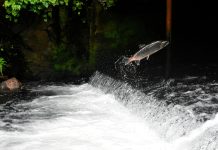
Salmon also feed multiple mammal and avian species and are ecosystem engineers bringing energy and nutrients to freshwater and riparian ecosystems, the report said.
The SeaBank includes nearly 15,000 miles of anadromous or potentially anadromous salmon streams and rivers and 123,000 acres of lakes. Approximately 5,500 individual streams and tributaries support salmon with varying levels of productivity. Abundant rainfall produces numerous small-to-medium-sized stream, nearly all producing pink, chum and coho salmon.
The large transboundary mainland rivers, the Alexander Archipelago island ecosystems, and the northern outer coast from Cape Spencer to Cape Suckling are the three distinct areas that produce salmon. The range of habitats and differences in run timing normally buffers against variability in marine and freshwater conditions, the report said.
Most SeaBank watersheds produce multiple salmon species. The region’s major mainland rivers, the Alsek, Chilkat, Stikine, Taku and Unuk, produce all five salmon species and run sizes can exceed more than one million fish annually.
Herring and halibut are also in abundance. The International Pacific Halibut Commission notes that the Gulf of Alaska hosts the largest proportion of the halibut stock, which range from northern California to the Bering Sea. Sablefish, also known as black cod, abound as well. Adult sablefish have shown considerable movement throughout the Bering Sea and Gulf of Alaska, with highest abundance entered in the Gulf of Alaska. Rockfish and shellfish, including crab, shrimp, geoducks and sea cucumbers are also harvested here.