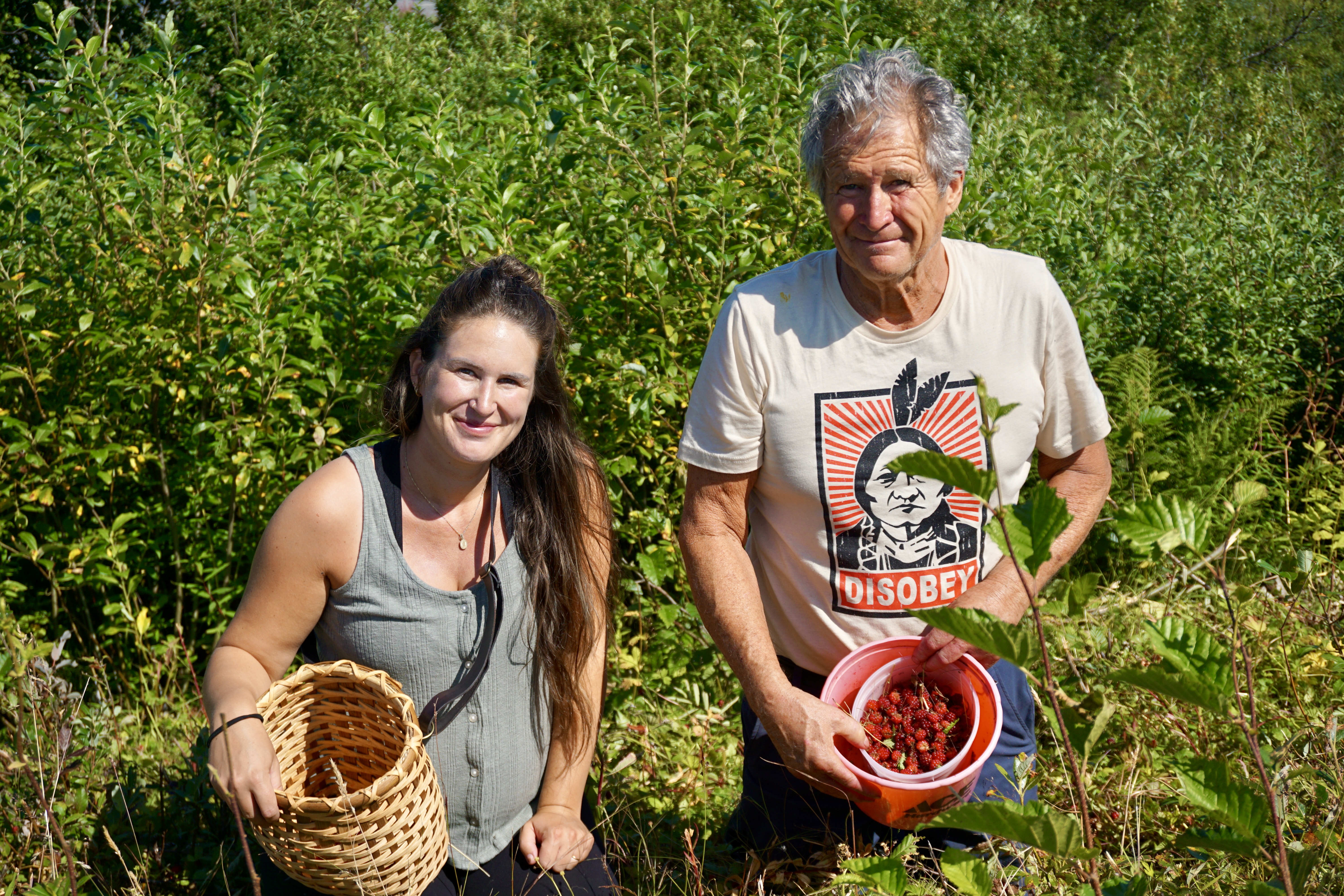
Cordovans are in the midst of enjoying a particularly plentiful wild berry year. People of all ages have taken to the trails and roadside the past couple of weeks to harvest wild strawberries, Nagoon berries, and salmonberries.
While salmonberries are a seasonal favorite enjoyed by many on casual walks and hikes by the handful, this berry season is exceptional due to a relative of the salmonberry that grows closer to the ground: Nagoons. Nagoon berries are dark red — almost burgundy — cluster fruits that grow from a single erect stem about three inches from the ground. The name comes from the word goon, which in Tlingit means “jewel,” alluding not only to the beautiful color of these fruits but to their prized flavor as well. Nagoon berries can be found throughout interior and coastal Alaska in woodsy environments and along roadsides where brush has been cleared. Serendipitous timing of sunshine filled days and intermittent rain have helped produce a bumper crop of wild Nagoons this year much to the delight of experienced harvesters and novice foragers alike.
Hayley Fleming, an avid berry picker, says that she was impressed with not only the quantity of berries available this year, but also in their individual size.
“I’ve never seen Nagoons this big,” she said. Fleming enjoys picking berries alongside her parents and plans to make a variety of nutritious food out of their collective harvest.
“They have such a complex flavor and with how big they are this year they are adding up quickly enough to make juice and jelly with plenty fresh left over,” she said.
Most wild Alaskan berries, like salmonberries, are an excellent source of vitamin C and antioxidants. Researchers at the University of Alaska Fairbanks Cooperative Extension program have measured the levels of antioxidants in common wild Alaskan berries by using the Oxygen Radical Absorption Capacity test (ORAC) which measures the amount of antioxidants in a given food. Salmonberries were shown to have a score of 40 in the ORAC test. This number is considered extremely high – in comparison a store-bought blueberry scores only 24.

Processing berries into jams or jellies lowers the amount of antioxidants to a degree. According to the Cooperative Extension guide on wild berries, the best way to retain the natural antioxidants in berries is to eat them fresh, frozen, juiced, or as dried fruit leather.
Danaya Hoover, cultural programs director at the Native Village of Eyak, says that it’s an honor to be able to continue harvesting these nutrient rich foods locally.
“Traditional foods such as salmon and berries have sustained Indigenous peoples of Alaska for thousands of years,” she said. “Berry patches have been passed down from generation to generation. The experience and memories made harvesting and gathering together as a family and even as individuals is priceless.”
Berry picking with friends and family is more than just a way to collect food, for many it is also an important way to support seasonal mental health. Hoover says that she feels berry picking is just one example of how wild foods represent a beautiful cycle of appreciation and respect for the land.
“[This] is a great way to reconnect with nature and bring some home to nourish your body and share with others as a gift,” she said.
For Cordovans who are new to wild berry harvesting and interested in learning more about nutrition and preparation, resources are available on the University of Alaska Fairbanks website at uaf.edu/ces. For local berry spots, ask a generous friend.
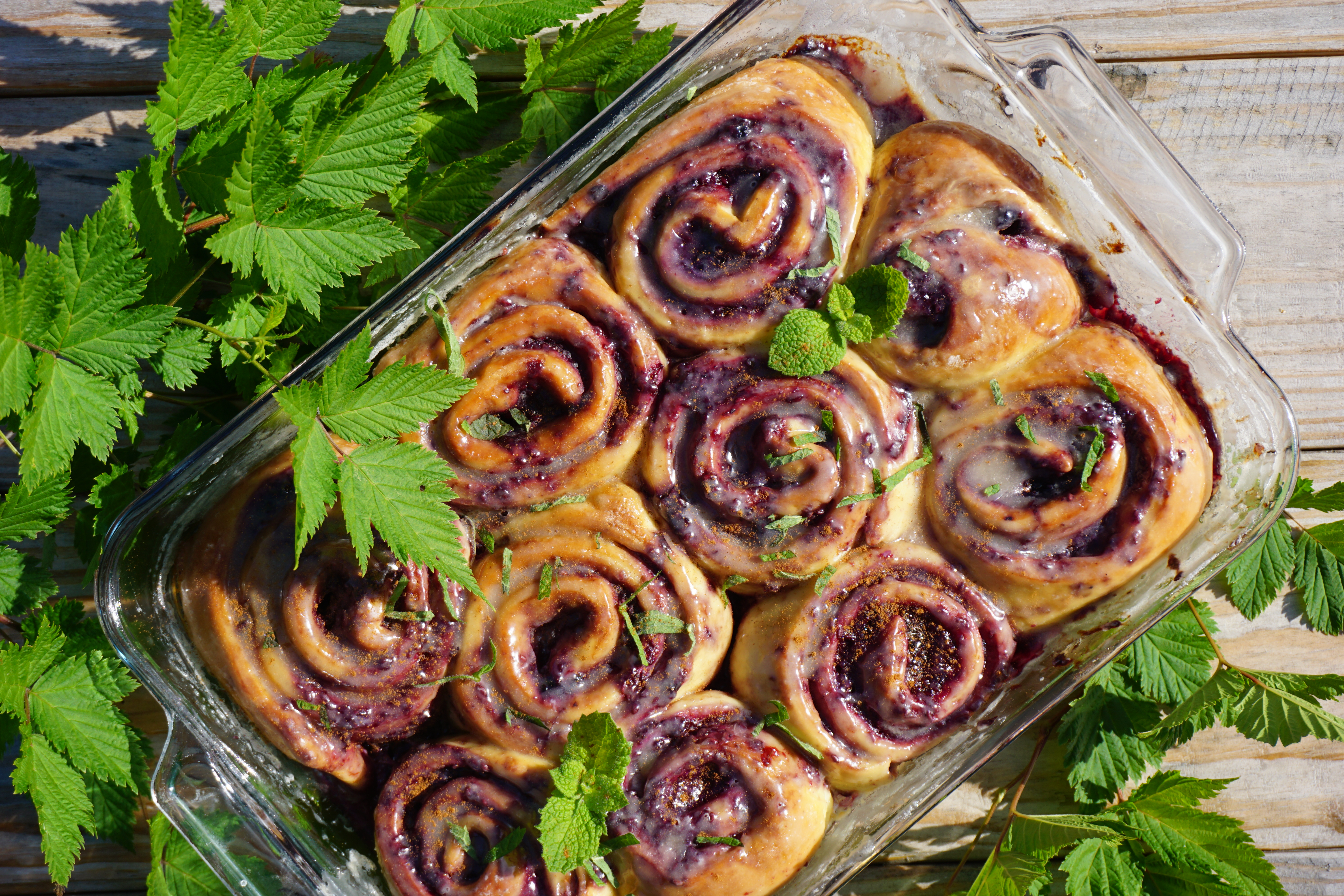
Brambleberry Buns recipe
This recipe is a great way to enjoy a mix of your favorite berries of the season. Buns rise overnight for a treat the next day. The berry filling can be made with two cups of berries mixed in any ratio you prefer. The buns pictured were made with half salmonberries and half blueberries.
Ingredients
Dough:
- ¾ cup whole milk
- 2 ¼ teaspoons active yeast
- ¼ cup brown sugar
- 1 egg
- 1 tablespoon full fat Greek yogurt
- ¼ cup melted butter
- 3 cups bread flour
- 1 teaspoon ground clove
- ¾ teaspoon salt
Filling:
- 2 cups fresh-mixed wild Alaskan berries
- ¼ cup water
- 1 tablespoon lemon juice
- 1 cup brown sugar
- 1 tablespoon cinnamon
Directions
Melt butter on the stove and add milk to warm, remove from heat and mix in yeast. Add this to an electric mixer and mix in sugar, room temperature egg, and yogurt with a dough hook. Slowly add flour, salt, and spices and mix for about six minutes. Dough will be slightly sticky. Transfer to a well-oiled bowl and cover with a towel. Allow this to rise for at least one hour. When ready for filling, dust the counter with flour and roll out a 15”x8” rectangle with the dough.
While dough is rising, heat all berry filling ingredients on the stove. Once the mixture comes to a boil, reduce to a simmer and stir regularly until the mixture reduces by one third. If berries are particularly juicy you can add a dash of cornstarch to thicken the mix. Allow this filling mixture to cool and thicken before spreading out onto the dough. Roll up the dough and cut eight equal buns. Place these in a greased casserole dish covered with plastic wrap. The dough will be covered in berry goop and very wet, so trust the process and allow it to rise overnight for a magical transformation. Bake at 350 degrees F for 25 minutes until golden.