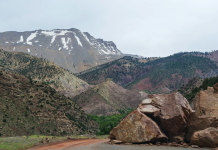
A massive rockslide initially attributed to equipment failure has dumped enough cyanide into a subtributary of the Yukon River to fill over 120 Olympic-sized swimming pools.
Yukon government officials are now overseeing plans to clean up the spill near the central Yukon Territory village of Mayo, 100 miles east of Dawson City.
The Alaska Department of Fish and Game and environmental and tribal entities are keeping a close watch on events at Victoria Gold’s Eagle Gold Mine in the Yukon Territory.
Doug Vincent-Lang, commissioner of the Alaska Department of Fish and Game, said on Tuesday that so far there appears to be no threat to salmon in transboundary rivers flowing into Alaska, but that his agency is concerned and maintaining a close watch on the situation.
Reports of the spill said that massive amounts of material were released during the spill and that about 10 days later high levels of cyanide were detected in a creek downstream. More recent samples showed of cyanide or heavy metal concentrations above guidelines, according to the Yukon government.
In its latest update on the heap leach failure, on July 26, the Yukon government said that due to the company’s failure to construct a safety berm, the government of Yukon had engaged contractors to design and build a berm. That structure is critical to ensure that groundwater monitoring and interception wells can be installed safely, their report said.

The groundwater wells are required to monitor groundwater for potential contamination and to pump potentially contaminated groundwater to surface for treatment and safe discharge. That work was expected to take about two weeks to complete.
The mine company was directed on July 20 to not discharge any water to an unlined storage facility and to procure or construct more water storage facilities.
Daily water sampling was underway, and samples were being collected at eight surface water sites downstream of the mine and three groundwater sites.
The report also said that the government of Yukon and the First Nation of Nacho Nyak Dun were in communication and have developed a joint water quality monitoring plan for onsite and downstream of the mine site.
Tim Bristol, director of SalmonState, voiced concern over the long-term impact not only of existing transboundary area mines, but those planned for future years.
“We need some kind of seat at the table about what is going to be allowed on shared watersheds,” Bristol said. “These are modern mines and Canada is saying they are on top of it. We’re worried about the future of transboundary rivers and mining exploration and no safeguards against disaster. Are we going to have one every decade. These are ticking time bombs.”
“The Eagle Mine cyanide catastrophe in the upper Yukon watershed feels disturbingly similar to British Columbia’s Mount Polley calamity a decade ago,” said Breanna Walker, director of Salmon Beyond Borders. “And our great fear is the next disaster will be in the headwaters of the Taku, Stikine or the Unuk rivers, which would directly impact Alaskan communities. The U.S. federal government needs to demand enforcement of the U.S.-Canada Boundary Waters Treaty now. Canada simply cannot be trusted to build mines on shared rivers without U.S., tribal, and Alaskan seats at the table.”
“Many gold mines use cyanide, even in Alaska,” said Guy Archibald, executive director of the Southeast Alaska Indigenous Transboundary Commission. “The failure at the Eagle Mine was not so much a failure of the containment structure, but a failure of the maintenance and regulatory oversight that we see is all too common in Canada despite repeated calls for mining reform, band aid fixes to regulations and assurances they will finally get it right.”
Sen. Dan Sullivan, R-Alaska, said he had sent a letter to Canadian Prime Minister Justin Trudeau and Canadian Ambassador to the U.S. Kirsten Hillman urging greater transparency and a full accounting of the cyanide spill. Sullivan said he had secured a commitment from the U.S. Geological Survey to conduct water testing in Alaska’s portion of the Yukon as a precautionary measure.
“Mining is critically important to our economy and our national security, and it can be done without endangering our environment or the well-being of our communities,” Sullivan said.