The Native Village of Eyak (NVE) hosted its inaugural Plant Symposium “Rooted in our Region” this past weekend, which featured keynote speakers knowledgeable about Alaskan plants and their uses, identification workshops, guided hikes, and hands-on workshops.
This is the first year NVE and Tribal Family Services (TFS) has organized the event, held on June 14-15, which was inspired by a growing interest in the community regarding foraging and wellness. Kayley DeLozier, wellness events coordinator at TFS, says visiting educator Kim Aspelund has been offering plant-focused wellness activities seasonally and attendance at these events showed a clear interest on behalf of the community.
“These workshops have been well-attended and sought after, providing a great foundation for planning a larger-scale event like the Plant Symposium to include our regional Tribes and beyond,” DeLozier said.
Aspelund has been leading periodic meditations and plant workshops in Cordova for the last two years as a part of TFS’ focus on mental health and physical wellbeing. Aspelund and DeLozier teamed up to bring the larger scale Plant Symposium idea to life in what DeLozier calls a “natural and meaningful mentorship.” Aspelund is a trained natural healer and Alaska Native who feels called to share her passion across Alaska. She says that the symposium is a clear demonstration of the value sharing knowledge can have in everyday life.
“The knowledge that was shared this weekend was invaluable and each keynote speaker and hands on learning session made a huge impact on everyone,” Aspelund said “It is so important to keep the opportunities of learning and sharing traditional plant knowledge alive and bring back to our kitchens and medicine cabinets the healing properties of our wild Alaskan plants.”
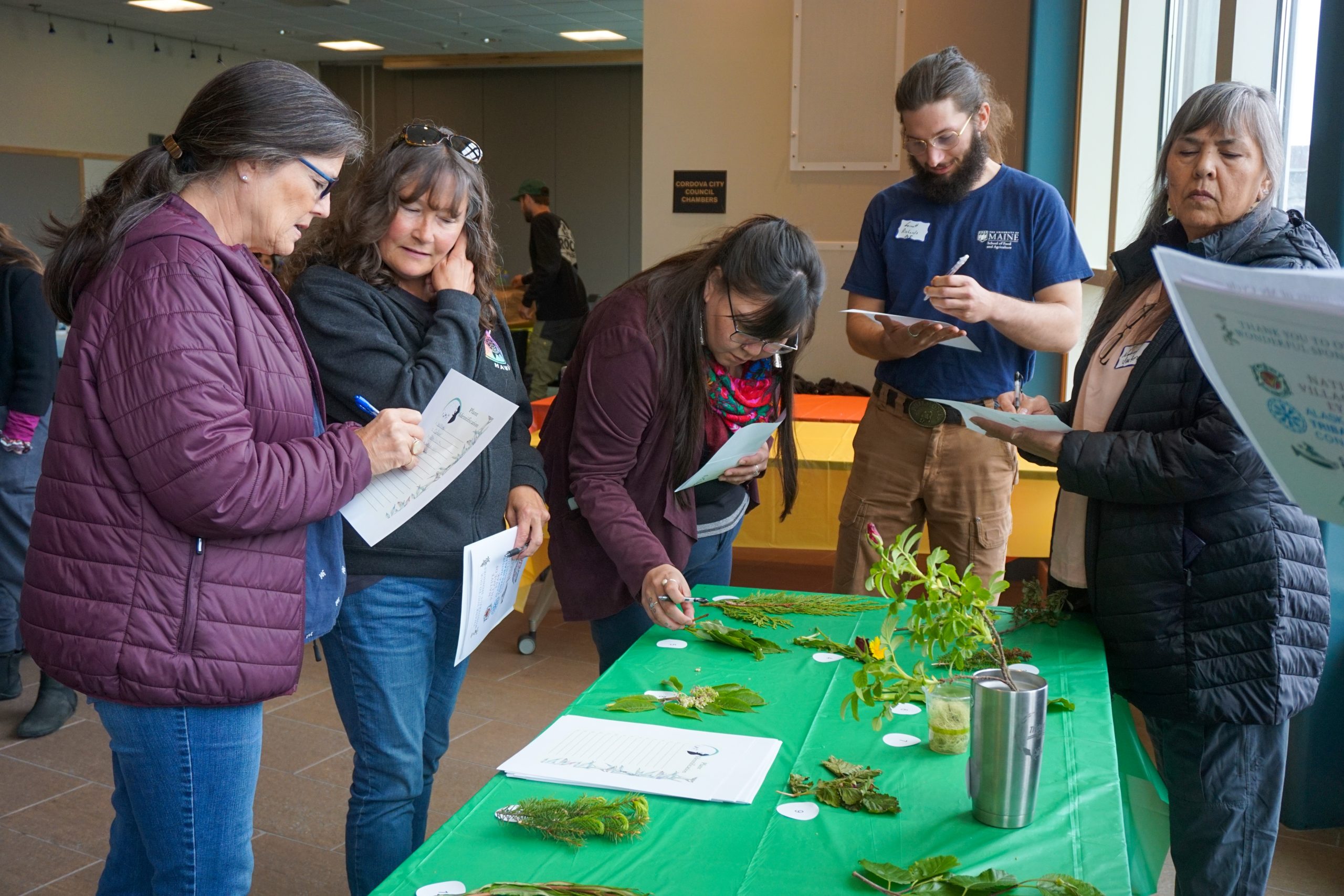
Registration for the event was free but participation was capped at 75 participants, a number DeLozier says was filled. Visitors from across Alaska and Washington attended to both speak and learn during the two days’ worth of workshops held inside the Cordova Center. Keynote speakers were able to utilize the North Star theater for presentations and the lower atrium was used for mingling, identification tables and refreshments. Opportunities to experience and enjoy local plants were abundant throughout the space, including during the lunches catered by Balgardes Catering — which featured local wild salmon, berries, kelp salad, and fry breads.

Keynote presentations focused on topics ranging from the basics of identification and foraging practices to discussions on the metaphysical experience of utilizing wild plants. Keynote sessions included “Energetics and Connections” by Aspelund, “The Store Outside Your Door” by Dr. Gary Ferguson, and “Seasons,” led by the Qyuanna Sisters among others. Participants were shuttled to locations around Cordova during the sunny mornings to practice plant identification with Raven Cunningham. In the afternoon, visitors could choose from a variety of hands-on breakout sessions such as nettle twine making, creating watercolors with botanical based paints, and crafting jewelry beads out of devil’s club stalks.
DeLozier says that the event coordinators worked hard to develop a schedule that would align with the community wellness goals of TFS in an educational and enjoyable environment.
“Our collective goal at Tribal Family Services is to provide healthy activities and healing resources,” DeLozier said. “I feel that this kind of event encompasses all of the above. Reconnecting with our Indigenous ways, being out in nature, and learning self-sufficient skills can give people the tools they need to live a healthy life.”
DeLozier said she sees locally supported wellness efforts as a necessity for the community, not just a trend.
“These discussions are vitally important,” she said. “As holistic medicine becomes more popular, I think it is so important to recognize Indigenous knowledge that has been passed down and has existed for time immemorial.”
Some of the participants said that the weekend taught them much more than just plant identification and uses. Meagan Smith and Garett Richards, two students at the University of Maine who attended the event, said that they found the symposium a place full of both knowledge and connections.
“I’m astounded and have so much respect for how much traditional knowledge is valued here… I learned a lot about Indigenous history,” Richards said.
Smith agreed that the connections between foraged foods and wellness underscored by the event is a value that can be shared.
“That’s something I believe too,” she said. “The closer people are to their food source the healthier the food is for them in more than just the physical way.”
The TFS team plans to host gatherings like the Plant Symposium again in the future and have already received positive feedback from this year’s gathering, they said.